Camera-Based AI's True Price Tag: Unpacking the Costs That Never Appear in the Original Proposal
When a mid-market manufacturer in the Midwest signs off on a vision AI deployment, the number on the contract rarely reflects what the company will actually spend. The software licensing fee is real. The integration services invoice is real. What frequently goes unexamined until the second or third fiscal year is everything else — the physical infrastructure required to keep cameras operational, the network capacity consumed by high-resolution image streams, the cooling systems retrofitted into facilities never designed for edge compute density, and the engineering hours quietly absorbed by routine maintenance that was never factored into the original proposal.
The result is a phenomenon that infrastructure planners have begun calling the vision tax: a diffuse, compounding surcharge on camera-based AI that technical leaders consistently underestimate and finance teams consistently misclassify. Understanding where it originates — and how to account for it before signing — is one of the more consequential skills an enterprise technology leader can develop.
Why the Initial Budget Always Looks Reasonable
Vision AI vendors are not being deliberately deceptive when they present licensing and integration costs as the primary financial consideration. From their perspective, those are the costs they control. What they cannot fully price is the operational reality of the environment where the system will run.
A typical mid-market deployment might involve thirty to sixty cameras distributed across a production floor, a warehouse, or a retail footprint. The software license, whether subscription or perpetual, represents a predictable line item. Inference hardware — whether on-premise GPU servers or edge compute nodes — gets quoted as a capital expense and approved as such. Installation and integration services carry a project-end date. On paper, the total looks manageable.
What that budget rarely captures is the ongoing cost structure that activates the moment the system goes live.
Hardware Refresh: The Clock That Starts Ticking on Day One
Camera hardware and edge compute infrastructure do not age gracefully in industrial environments. Dust, vibration, temperature fluctuation, and continuous operation compress the effective lifespan of physical components in ways that lab benchmarks never reflect. Industrial-grade cameras typically carry a manufacturer lifecycle of three to five years, but real-world replacement cycles in demanding environments often run shorter.
More significantly, the compute hardware required to run contemporary vision models evolves faster than most enterprise procurement cycles anticipate. A GPU configuration that handles a 2024 model efficiently may struggle with the architecture required by a 2026 model trained on higher-resolution inputs. When organizations discover mid-cycle that their inference hardware can no longer support the accuracy requirements of an updated model, they face an unbudgeted capital event — one that rarely appears in the original total cost of ownership analysis.
For a thirty-camera deployment with dedicated edge inference nodes, hardware refresh over a five-year window can represent between forty and seventy percent of the original capital expenditure, depending on the operational environment and the pace of model evolution.
Thermal Management: The Infrastructure Nobody Budgets
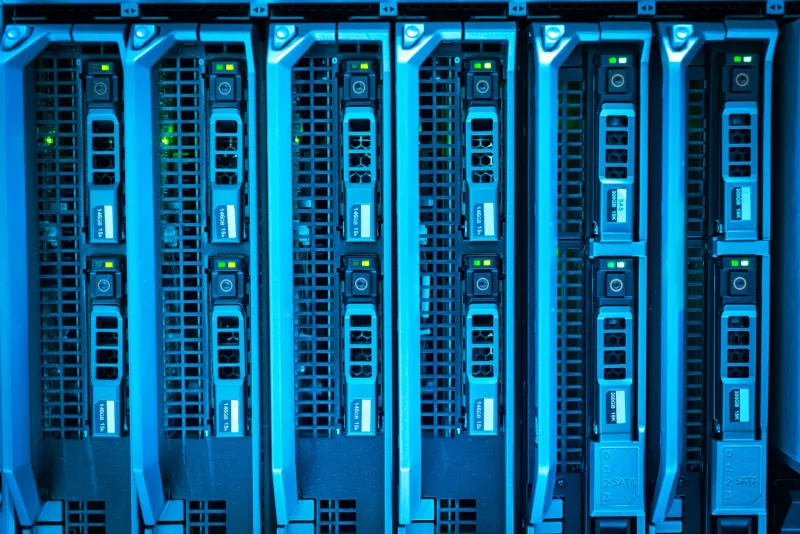
Edge compute nodes generate heat. Dense GPU configurations generate substantial heat. When organizations deploy inference hardware in facilities designed for manufacturing equipment or ambient warehouse operations, they frequently discover that existing HVAC infrastructure cannot absorb the additional thermal load without modification.
Retrofitting cooling capacity is not a trivial expense. Depending on the facility and the density of compute hardware, organizations in warmer US climates — Texas, Arizona, the Southeast — can encounter cooling infrastructure costs that approach or exceed the original hardware budget. In facilities where precise temperature control is already required for operational reasons, additional compute load can push existing systems beyond their rated capacity, requiring either hardware upgrades or dedicated supplemental cooling.
This cost almost never appears in a vendor's deployment proposal. It is classified as a facilities expense, which means it lands in a different budget, often managed by a different team, and is frequently discovered only after deployment has begun.
Network Bandwidth: The Invisible Monthly Invoice
High-resolution cameras generate data volumes that surprise organizations accustomed to conventional IT network planning. A single 4K camera operating at thirty frames per second, even with efficient compression, can consume bandwidth that strains infrastructure designed for general business traffic. Multiply that across a multi-site deployment, and the aggregate demand can require significant network upgrades — both within facilities and, for cloud-connected architectures, across WAN connections.
For organizations using cloud inference rather than edge processing, the cost structure becomes more acute. Transmitting raw or minimally compressed image data to a cloud endpoint for analysis introduces both bandwidth costs and latency that can undermine the operational value of real-time vision systems. Organizations that discover this dynamic after deployment face a difficult choice: accept degraded performance, invest in edge compute infrastructure that was not originally scoped, or absorb ongoing bandwidth costs that were never projected.
In multi-site enterprise deployments, unplanned network infrastructure investment can represent fifteen to thirty percent of total five-year cost — a figure that rarely surfaces during the sales process.
Maintenance Overhead: The Engineering Hours That Disappear
Vision systems require ongoing attention that does not fit neatly into standard software maintenance models. Cameras need physical cleaning, alignment verification, and lens inspection on regular cycles. Edge compute nodes require firmware updates, hardware diagnostics, and occasional component replacement. Models require monitoring for drift, retraining when environmental conditions change, and redeployment when updated versions are released.
In organizations without dedicated MLOps capability, this overhead falls on engineering teams that are already managing other priorities. The hours are real, but they are rarely tracked as vision system costs — they appear as general engineering labor, distributed across sprints and quarters in ways that make them invisible to anyone reviewing the vision AI budget in isolation.
A structured cost-accounting framework should include a maintenance overhead line that captures estimated engineering hours per camera per quarter, multiplied by fully loaded labor cost. For mid-market organizations with ten to twenty cameras, this figure typically runs between $40,000 and $80,000 annually — a meaningful number that almost never appears in the original proposal.
Building a Cost-Accounting Framework That Reflects Reality
Technical leaders who want to understand their actual vision AI cost structure before committing to a deployment should build a five-year total cost of ownership model that explicitly addresses six categories: software licensing, hardware capital, hardware refresh reserves, cooling and facilities infrastructure, network capacity, and maintenance labor.
For each category, the model should include a base case, a conservative upside case, and a stress case that reflects what happens when environmental conditions or model requirements change faster than anticipated. Organizations that have completed this exercise consistently find that their five-year total cost runs between three and seven times the original software and integration estimate — which is where the vision tax becomes visible.
The goal is not to discourage investment in camera-based AI. The operational value of well-deployed vision systems is substantial and, in many industries, increasingly difficult to compete without. The goal is to ensure that technical leaders enter procurement conversations with a complete financial picture — one that allows them to negotiate appropriate vendor commitments, build accurate multi-year budgets, and avoid the organizational friction that follows when costs exceed projections by a factor the original proposal never acknowledged.
Seeing clearly, in this context, means more than what the cameras capture. It means understanding the full financial landscape of the systems built to interpret what they see.