Accuracy Is Not Enough: The Case for Reliability Engineering in Production Computer Vision
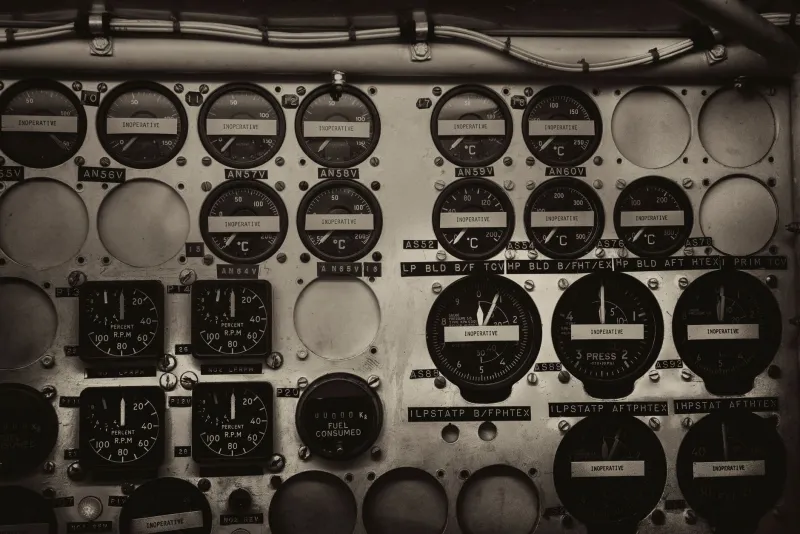
In 1983, an Air Canada Boeing 767 ran out of fuel at 41,000 feet because the ground crew had calculated its fuel load in pounds rather than kilograms. The aircraft's instruments were functioning perfectly. Every individual reading was accurate. The system failed catastrophically anyway, because the broader conditions under which it operated had drifted outside the assumptions embedded in its design.
The parallel to modern computer vision should be uncomfortable for anyone who has shipped a production model.
The dominant metric in computer vision development remains accuracy — specifically, performance on curated benchmark datasets that represent a cleaned, balanced, and well-characterized sample of the problem space. Teams celebrate when their models achieve 94 percent accuracy on a validation set. They ship. And then, somewhere in production, the model encounters a fogged parking lot camera, a new product SKU that was never in the training distribution, or an adversarial lighting condition introduced by a facility renovation. The accuracy score does not change. The model's behavior does.
This is not a failure of engineering competence. It is a failure of engineering philosophy.
What the Benchmark Obscures
Benchmark accuracy is a measurement of central tendency. It tells you how a model performs on average, across a population of inputs that someone has already deemed representative. It says relatively little about the tails of that distribution — the edge cases, the distribution shifts, the inputs that are rare in the training data but common in specific real-world contexts.
This distinction matters enormously in production. A model that achieves 95 percent accuracy on a balanced validation set may perform at 60 percent on a specific subset of inputs that constitutes 30 percent of the actual production workload. If that subset is systematically underrepresented in the validation data — because it corresponds to a particular shift, a specific facility, or a product category that was added after training — the benchmark score provides no warning.
The aerospace industry learned this lesson at considerable cost over many decades. The result was a discipline called system safety engineering, which treats reliability not as a property of components in isolation but as an emergent characteristic of the entire system operating across the full range of conditions it may encounter. This discipline does not ask, "How accurate is this instrument?" It asks, "Under what conditions does this instrument fail, and what happens to the system when it does?"
Computer vision has not yet asked that second question with sufficient rigor.
The Robustness Gap in Practice
The gap between laboratory performance and production reliability manifests in several characteristic patterns that engineering teams encounter repeatedly.
Environmental shift is the most common. A model trained on images captured under controlled warehouse lighting behaves differently when that warehouse installs new LED fixtures with a different color temperature. The change is invisible to a human observer. To the model, it represents a meaningful distributional shift that was never represented in training. Accuracy degrades. The degradation is gradual and difficult to detect without explicit monitoring infrastructure.
Edge cases present a related but distinct challenge. In any sufficiently large production environment, the long tail of possible inputs is effectively infinite. A defect detection model trained on a manufacturing line will eventually encounter a defect type it has never seen. The question is not whether this will happen, but whether the system is designed to handle it gracefully — to flag uncertainty, escalate to human review, or fail safely — rather than producing a confident incorrect prediction.
Adversarial inputs, while less frequently discussed in enterprise contexts, are a growing concern. As computer vision systems take on higher-stakes roles in access control, quality assurance, and physical security, the population of actors motivated to deceive them expands. Research consistently demonstrates that even high-performing models are vulnerable to perturbations that are imperceptible to humans but that systematically shift model outputs. A benchmark score provides no protection against this class of failure.
What Aerospace and Nuclear Engineering Offer
The industries that operate the most safety-critical systems in the world do not trust their instruments. They verify them. They design for failure. They treat the absence of observed failures not as evidence of reliability but as an argument for continued vigilance.
Several specific practices from these domains translate directly to vision system engineering.
Failure mode and effects analysis (FMEA) is a structured methodology for enumerating the ways a system can fail and assessing the consequences of each failure mode. Applied to a computer vision pipeline, FMEA would require engineering teams to explicitly document: What happens if the input image is corrupted? What happens if the lighting condition is outside the training distribution? What happens if the model produces a false positive at a rate three times higher than expected? These questions are rarely asked systematically in vision development. They should be asked before deployment, not after.
Operational design domain (ODD) specification is a concept borrowed from autonomous vehicle development that has broader applicability. Every deployed vision system should have an explicit, documented specification of the conditions under which it is designed to operate reliably — the camera types, lighting ranges, subject categories, image resolutions, and environmental contexts that fall within its validated envelope. Inputs outside the ODD should trigger explicit handling logic rather than silent inference.
Independent verification and validation (IV&V) is the practice of having system reliability assessed by a team that is organizationally separate from the team that built it. In aerospace, this is a regulatory requirement for safety-critical systems. In computer vision, it is essentially unheard of. The same team that trained the model evaluates its performance, using data they selected and a validation methodology they designed. The structural incentives of this arrangement do not favor the discovery of failure modes.
Toward a New Standard
None of this is an argument against accuracy as a metric. High accuracy matters. The argument is that accuracy alone is insufficient as a reliability standard for systems that operate in the real world, at scale, under conditions that cannot be fully anticipated at training time.
The organizations that will build genuinely trustworthy vision systems are those that adopt a reliability engineering posture rather than a performance optimization posture. This means investing in adversarial evaluation, not just standard validation. It means defining explicit operational boundaries and building enforcement mechanisms at the inference layer. It means establishing monitoring infrastructure capable of detecting distributional shift before it manifests as visible failure. And it means treating uncertainty quantification — the model's ability to communicate what it does not know — as a first-class engineering requirement rather than an academic curiosity.
The computer vision field has demonstrated, convincingly, that machines can be made to see. The harder and more consequential challenge is demonstrating that they can be made to see reliably — not just in the lab, not just on the benchmark, but in the full complexity of the environments where the technology is actually deployed.
Persistence in this domain means building systems that can be trusted not because they have never been tested, but because they have been tested rigorously, honestly, and under conditions that reflect the world as it actually is.