Finding $2M in Plain Sight: A Structured Audit for Vision AI Waste
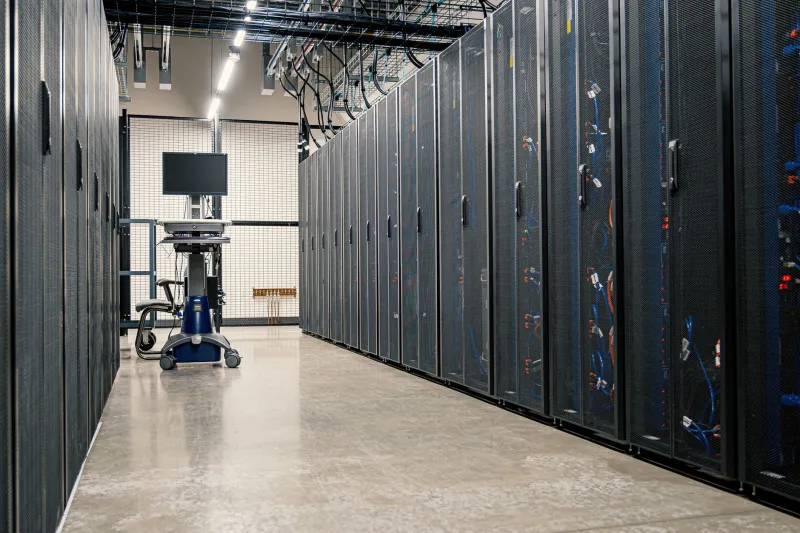
There is a particular kind of organizational blindness that settles over teams who have been operating vision AI infrastructure for more than eighteen months. The system works—or works well enough—and that functional adequacy creates a powerful disincentive to look too closely at what it actually costs. By the time a CFO schedules a line-item review, the inefficiencies have typically been running long enough to represent a material financial problem.
The good news is that vision AI waste follows predictable patterns. Organizations that have deployed camera-based inference pipelines, distributed edge compute, or centralized vision processing workloads tend to accumulate the same categories of inefficiency in the same sequence. That predictability makes a structured audit not only possible but highly productive—often surfacing six-figure savings within the first week of serious examination.
What follows is a diagnostic framework designed for technical leaders who want to conduct that examination before someone else does it for them.
Start With Data Movement, Not Model Performance
The instinct in most audits is to begin with model accuracy or inference quality. Resist it. The largest concentrations of waste in mature vision deployments are almost never in the models themselves—they are in the infrastructure surrounding those models, and data movement is the most expensive component of that infrastructure.
Begin by mapping every point at which raw image or video data is duplicated, transmitted, or stored redundantly. In organizations that have grown their vision stack organically—adding use cases, vendors, and integrations over time—it is common to find the same frame being processed by two separate pipelines serving overlapping functions. A retail operation, for example, might be running inventory detection and loss prevention inference on the same camera feed through separate vendor contracts, each with its own data ingestion process.
Calculate the true cost of each data movement event: storage write costs, egress fees if cloud-based, and the engineering time required to maintain each pipeline. In mid-sized deployments, redundant data pipelines alone frequently account for $300,000 to $600,000 in annual waste.
Audit Compute Allocation Against Actual Utilization
Over-provisioned compute is the second major category of recoverable waste, and it is particularly common in organizations that sized their infrastructure during a pilot phase and never revisited those allocations after production stabilized.
Pull utilization metrics for every GPU or accelerator resource in your vision stack. Look specifically at average utilization during peak operating hours—not theoretical maximums, but the utilization levels your workloads actually sustain during normal business operations. In the majority of production vision environments, GPU utilization sits between 20 and 45 percent during peak periods. If your infrastructure was provisioned for 80 percent utilization and is running at 30, the delta represents direct, recoverable cost.
This analysis should extend to cloud-based inference endpoints if your organization uses managed vision APIs. Examine whether reserved capacity contracts match actual call volumes, and whether batch processing workloads are being run on real-time-priced infrastructure because no one restructured the architecture after the initial deployment.
Right-sizing compute allocations—without touching a single model—commonly yields $200,000 to $500,000 in annual savings for organizations operating at meaningful scale.
Examine Your Retraining Cadence With Skepticism
Model retraining is expensive in ways that rarely appear on a single line item. There is the compute cost of the training run itself, the engineering hours required to prepare and validate training data, the QA process for the retrained model, and the deployment overhead of pushing updated weights to production. When you add these costs together across every model in a typical enterprise vision stack, the annual retraining budget frequently exceeds what leadership believes it to be by a factor of two or three.
The audit question here is not whether retraining is necessary—it often is—but whether the cadence is driven by genuine performance degradation or by organizational habit. Many teams establish a quarterly retraining schedule during the initial deployment and never revisit whether that frequency remains justified. If your production monitoring data does not show meaningful drift between retraining cycles, you are paying for retraining that is not improving outcomes.
Conduct a retrospective analysis: for each model retrained in the past twelve months, document the performance delta between the pre-retrain and post-retrain versions. If the majority of retraining cycles produced improvements below your defined performance threshold, the cadence is excessive. Adjusting retraining frequency based on actual drift signals rather than calendar dates typically reduces retraining costs by 40 to 60 percent.
Quantify Your Vendor Lock-In Exposure
Vendor lock-in costs are among the most difficult to surface because they do not appear as a direct expense—they appear as an absence of negotiating leverage. Conduct an honest inventory of every component in your vision stack where switching costs are prohibitively high: proprietary data formats, closed inference APIs, hardware-specific model optimizations, or contractual terms that tie you to a single provider's pricing.
For each locked-in component, estimate the premium you are paying relative to an open-market alternative. This is not always straightforward, but even rough estimates are valuable. Organizations frequently discover that a proprietary vision API they adopted for convenience is billing at rates three to five times what an equivalent self-hosted or open-source implementation would cost at their current volume.
Lock-in costs also manifest in engineering time: the hours spent working around the limitations of a proprietary system, building custom integrations that would be unnecessary with a more open architecture, or managing the complexity of a stack that grew around vendor constraints rather than organizational requirements. Quantify this time and apply a fully-loaded engineering cost to it.
Build a Prioritized Remediation Roadmap
Once the audit is complete, the temptation is to address everything simultaneously. That approach typically produces neither speed nor savings. Instead, sequence remediation by the combination of financial impact and implementation complexity.
Items that should move immediately—within the first 30 days—are those with high financial impact and low implementation risk: right-sizing compute allocations, eliminating clearly redundant pipelines, and adjusting retraining cadences. These changes require no architectural redesign and can be executed without disrupting production workloads.
The 30-to-90-day window is appropriate for addressing vendor lock-in in components where an alternative exists and migration complexity is manageable. Prioritize the highest-cost locked-in components first, and approach migration incrementally rather than attempting a wholesale platform change.
Architectural remediation—rebuilding pipelines to eliminate structural redundancy, redesigning data flows to reduce movement costs—belongs in the 90-day-plus horizon. These changes deliver the largest long-term savings but require careful planning to avoid introducing new instability.
The Audit as Organizational Practice
A one-time audit is valuable. A recurring audit is transformative. Vision AI infrastructure evolves continuously—new use cases are added, vendors are integrated, and architectural decisions accumulate—and the waste that a thorough audit eliminates today will begin regenerating within twelve to eighteen months without a process to prevent it.
Building the audit framework described here into a semi-annual review cycle gives technical leaders the visibility to manage infrastructure costs proactively rather than reactively. It also creates a defensible record of stewardship that is increasingly valuable as AI infrastructure spending receives greater executive scrutiny.
The organizations that persist in this discipline—that treat infrastructure efficiency as an ongoing practice rather than a one-time exercise—are the ones that maintain the financial flexibility to invest in genuine capability advancement. That is the competitive position worth building toward.